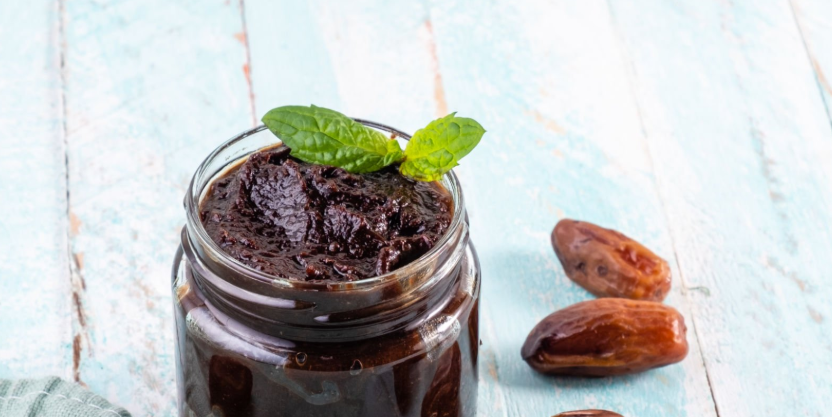
El Monaguillo tells you an interesting fact: the indirect role that dates have played in films and television series throughout different eras.
At El Monaguillo, we would like to share an interesting fact with you, namely the indirect role that dates have played in numerous films and television series throughout different eras.
Dates as a symbol and cultural presence
In addition to their historical and gastronomic importance, dates have also found a small but steady place in film and television. Although they rarely take centre stage, their presence on screen often connects with themes of culture, tradition, geography (such as the desert), natural energy, or spirituality.
Below, we explore some of the audiovisual productions in which dates appear in a significant, symbolic or anecdotal way, and how these fruits contribute to creating atmospheres, contexts and messages in the stories told to us in film and television.
Dates and their presence in films and television series.
International films featuring dates
Firstly, it is inevitable to mention films set in the Middle East or North Africa, regions where dates are a staple food and culturally significant. In films such as Lawrence of Arabia (1962), dates appear in everyday scenes depicting caravans, Bedouin camps and their famous hospitality. The presence of bowls of dates in some sequences helps to reinforce the ethnographic authenticity of the film. For viewers, even if they do not immediately identify them, these details contribute to a more accurate portrayal of the historical and geographical context.
Another notable example is The Mummy (1999), where the characters pass through oases and local markets. In several scenes, vendors offer dried fruits, including dates, which are part of the visual landscape that characterises everyday life in desert regions. Although dates are not mentioned literally, their appearance as part of the props helps to situate the viewer in a hot, arid environment where this food is common. In this case, dates serve more as a setting resource than as a direct narrative element.
Dates and their presence in films and television series.
In contemporary cinema, dates are also present in stories focused on modern life in producing countries. For example, Moroccan films such as Ali Zaoua (2000) and Tunisian films such as As I Open My Eyes (2015) include scenes in homes or celebrations where dates are served with tea or as part of traditional festivities. These sequences help to convey a sense of cultural identity and historical continuity. Dates, a fruit deeply associated with hospitality, become a symbol of home and socialisation.
In Western independent cinema, there are memorable moments where dates appear as part of the characters’ narrative. A curious example occurs in the film Date Movie (2006), whose title plays on the word “date”, which means both “romantic date” and “fruit”. Although the story does not revolve around the fruit, the linguistic play on words has generated more than one visual joke about this fruit, taking advantage of its sweet nature to reinforce the humorous tone of the film.
Television series and programmes featuring dates.
Television has also found dates to be a useful element for setting the scene in stories. In period dramas such as Downton Abbey and Peaky Blinders, dates occasionally appear at formal dinners or on dessert trays, reflecting their status as an exotic, imported delicacy in early 20th-century Europe. These small culinary details reinforce the idea of status and luxury, as for much of European history, dates were considered prestigious products accessible only to certain social classes.
In the world of Western independent cinema, there are memorable moments where dates appear as part of the characters’ narrative. A curious example occurs in the film Date Movie (2006), whose title plays on the word “date”, which means both “romantic date” and “fruit”. Although the story does not revolve around the fruit, the linguistic play on words has generated more than one visual joke about this fruit, taking advantage of its sweet nature to reinforce the humorous tone of the film.
Dates and their presence in films and television series.
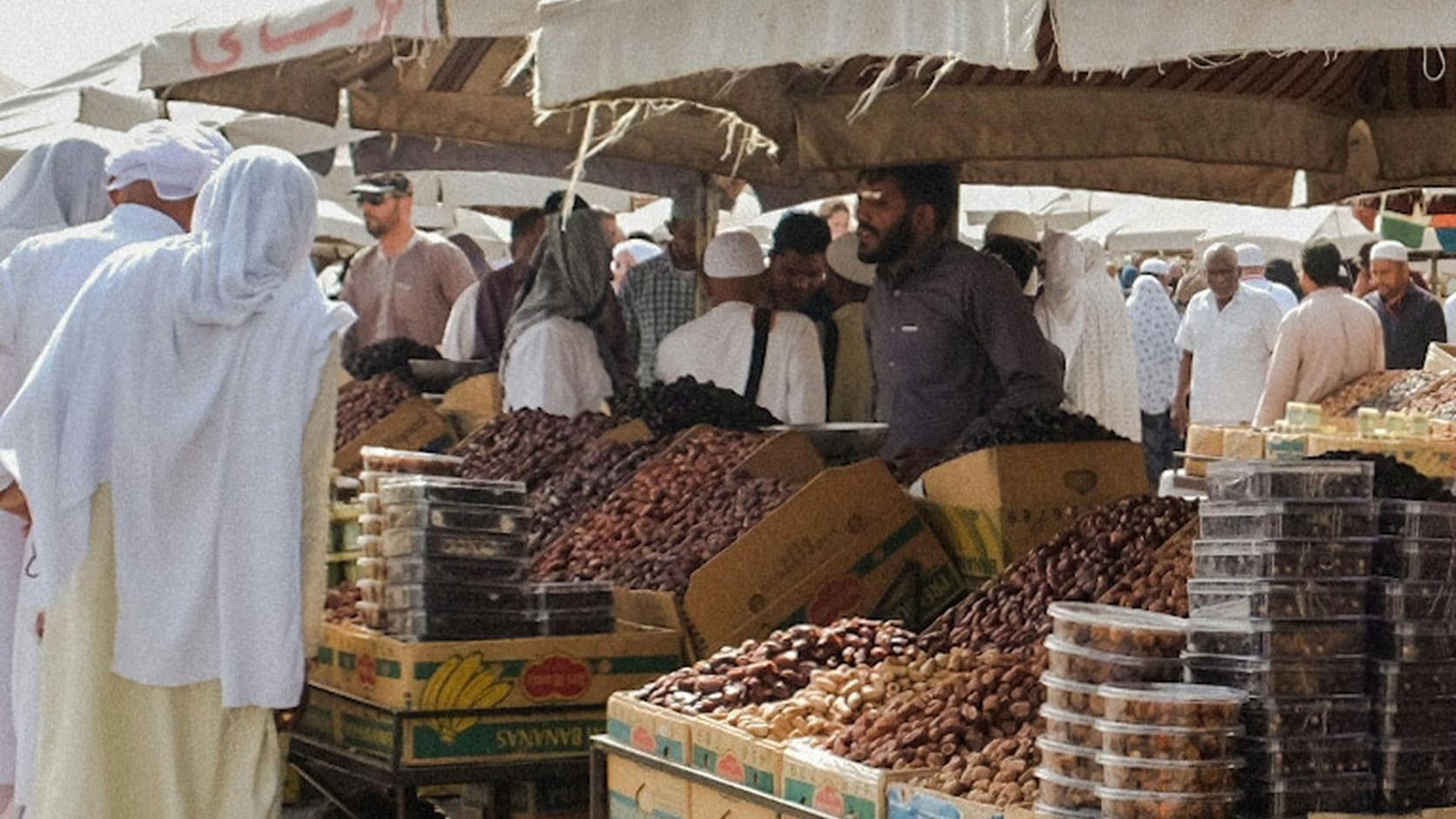
In more documentary-style productions, dates have played a more prominent role. Gastronomic series such as Chef’s Table and Street Food have devoted segments to Middle Eastern markets where dates occupy a central place. In these cases, dates appear not only as food, but also as the protagonists of human stories: farmers explaining how they care for their palm trees, vendors displaying different varieties, and chefs revealing traditional recipes. Here, dates become a vehicle for discussing culture, tradition and sustainability.
In short, although dates do not play a leading role in film and television, their discreet but constant presence reveals their ancestral cultural importance. From historical settings to contemporary gastronomic identity, dates bring authenticity to the stories we see on screen. Every time they appear, even as a simple decorative element, they remind viewers of their essential role in the lives of many communities and their ability to connect tradition and nutrition.
The Date, our product par excellence and symbol of quality and tradition
The Date, our product par excellence and symbol of quality and tradition The date is a fruit obtained from the date palm (Phoenix dactylifera). It is believed to have appeared around the Persian Gulf and was cultivated, ...
World recipes with dates, exploring unique flavors
World recipes with dates, exploring unique flavors In a corner of the world, under the scorching sun of the desert, dates gently sway in the palms of date palms. But these sweet fruits are not limited to a single region;...
Date Powder: A Natural Sweetener with Nutritional Benefits
Date Powder: A Natural Sweetener with Nutritional Benefits Date powder is a natural sweetener derived from dried dates, a fruit primarily grown in warm regions of the world such as the Middle East and North Africa. This ...
The Date: A Star in Healthy Food Innovation – An Artisan Bread with Omega-3 Wins the INNOBIOTEC 2025 Award
The date continues to make its mark in both gastronomy and food innovation. This time, it has done so in a big way—as the main ingredient in an artisan bread enriched with Omega-3, which has won first prize in the presti...
More and more people are paying attention to what they eat, whether for health, well-being, or conditions like celiac disease, which requires a gluten-free diet. At El Monaguillo, we are committed to conscious, safe, and...
Sun-Dried Tomatoes: Flavor, Tradition, and Health with El Monaguillo
At El Monaguillo, we believe in what’s natural and authentic. That’s why we dry tomatoes traditionally, transforming them into a flavorful, nutrient-rich ingredient packed with healthy properties.
In a world where physical performance and health go hand in hand, more and more athletes are seeking natural, functional, and sustainable sources of energy. Among the foods that have gained prominence for their nutrition...
Within the vast world of palm trees, the date palm, or Phoenix dactylifera, is one of the most recognized and valued species. It also goes by other names, such as common palm, tamara, or phoenix. This plant stands out no...